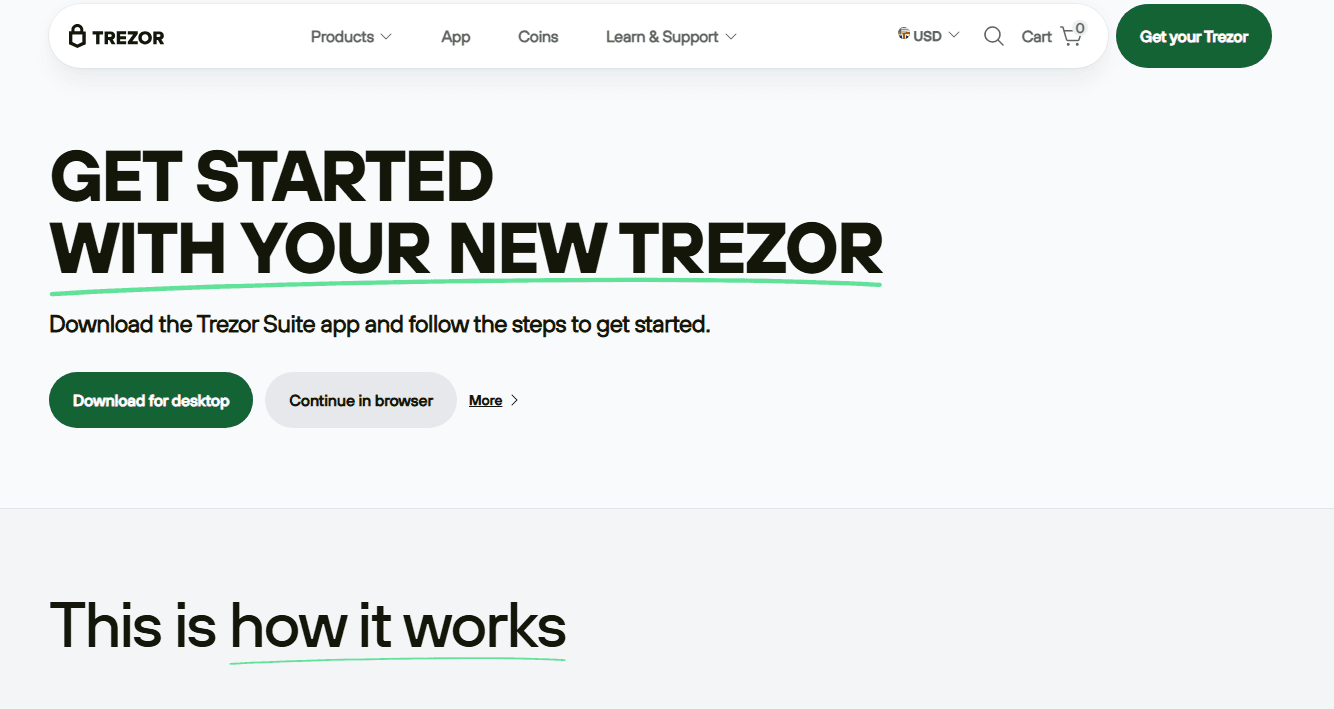
Trezor.io/start – Getting Started with Your Trezor Hardware Wallet
As digital currencies become a long-term investment choice, secure storage is essential. Trezor.io/start is the official entry point for setting up a Trezor hardware wallet, allowing users to protect their cryptocurrency with offline security and full personal control.
This article explains the purpose of Trezor.io/start, how the setup process works, and why completing it correctly is critical for keeping your assets safe.
Introduction to Trezor.io/start
Trezor.io/start is the guided setup process designed for first-time Trezor users. It helps configure the device, establish security features, and prepare the wallet for storing and managing cryptocurrencies securely.
Unlike software wallets, Trezor hardware wallets store private keys inside the device itself. This design keeps sensitive data offline and protected from internet-based attacks.
Why the Trezor Setup Process Matters
The initial setup defines how secure your wallet will be for years to come. Skipping steps or making mistakes during Trezor.io/start can weaken your wallet’s protection.
A correct setup provides:
Offline generation and storage of private keys
Protection from phishing and malware
Full control without third-party access
Secure transaction verification on the device
Taking time during setup ensures long-term safety.
Preparing for a Safe Setup
Before starting Trezor.io/start, choose a private location where you won’t be interrupted. You will create sensitive security information that must remain confidential.
Make sure you have:
Your Trezor hardware wallet
A trusted computer or mobile device
Pen and paper for backup records
Enough time to complete setup carefully
Good preparation reduces the risk of errors.
Step 1: Power On the Trezor Device
Connect your Trezor device to your computer or supported mobile device. Once powered on, the screen will guide you through the setup process.
All confirmations must be approved on the physical device, ensuring no action can be taken without your direct consent.
Step 2: Choose Wallet Creation
During the Trezor.io/start process, you will be asked to create a new wallet or restore an existing one. New users should select the option to create a new wallet.
At this stage, the device generates a unique private key internally. This key is never shown, copied, or transmitted outside the device.
Step 3: Create a Secure PIN
Next, you will set a PIN code to protect your wallet from unauthorized physical access. The PIN must be entered each time the device is connected.
Trezor devices increase delay times after incorrect PIN attempts, making brute-force attacks extremely difficult.
Step 4: Record the Recovery Seed
One of the most important steps in Trezor.io/start is writing down the recovery seed. This seed is the only way to recover your wallet if the device is lost or damaged.
Write the seed down exactly as displayed and store it offline in a secure place. Never save it digitally or share it with anyone.
Step 5: Verify the Recovery Seed
After recording the recovery seed, the device will ask you to confirm it by selecting the words in the correct order. This step ensures your backup is accurate.
Verification prevents permanent loss caused by incorrect or incomplete backups.
Step 6: Access Wallet Features
Once setup is complete, you can access your wallet dashboard. From there, you can view balances, manage supported cryptocurrencies, and approve transactions.
All sensitive actions require confirmation on the Trezor device, ensuring maximum protection even if your computer is compromised.
Ending a Wallet Session Securely
When you finish using your wallet, disconnect the Trezor device and close the wallet interface. This immediately ends wallet access.
Because authentication depends on the physical device, unplugging it restores full security.
Common Setup Issues to Avoid
Some users encounter problems during Trezor.io/start due to avoidable mistakes.
These include:
Not verifying the recovery seed
Choosing an easy or predictable PIN
Storing recovery information digitally
Completing setup in a public environment
Avoiding these errors ensures long-term wallet protection.
Security Tips After Setup
Completing Trezor.io/start is only the beginning. Maintaining strong security habits is essential.
Best practices include:
Keep the recovery seed offline and private
Never share PIN or recovery details
Update device firmware regularly
Verify all transaction details on the device screen
Avoid using shared or public computers
These habits help protect your digital assets over time.
Why Trezor.io/start Is Trusted
Trezor.io/start follows a transparent, user-controlled security model. By removing online authentication and keeping private keys offline, Trezor minimizes exposure to digital threats.
This approach has earned trust among beginners and experienced crypto holders alike.
Final Thoughts
Trezor.io/start is the foundation of secure cryptocurrency ownership using a Trezor hardware wallet. By carefully completing the setup process—creating a PIN, securing the recovery seed, and verifying backups—users gain complete control over their digital assets.