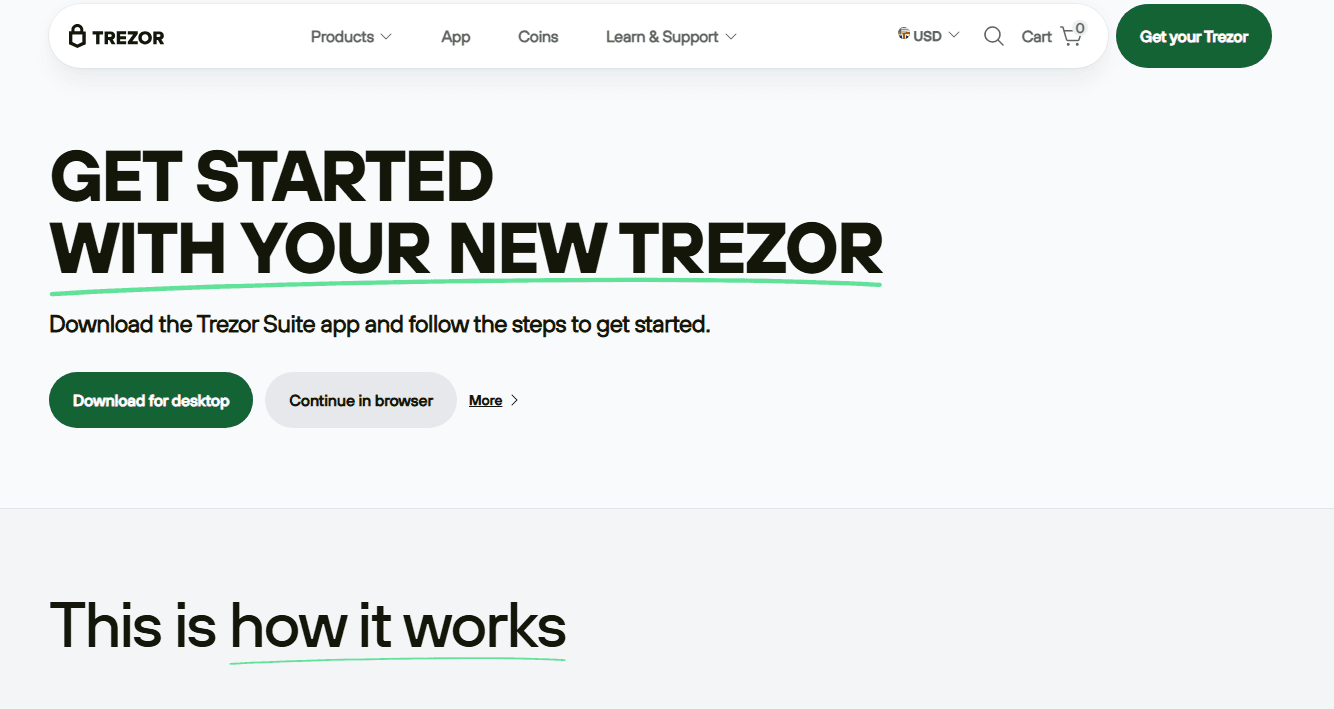
Trezor.io/start – Begin Your Journey Toward Safer Crypto Storage
As cryptocurrency continues to gain global attention, protecting digital assets has become a critical responsibility. Trezor.io/start is the official beginning point for setting up a Trezor hardware wallet, allowing users to secure their crypto with offline protection and complete personal control.
This guide explains the purpose of Trezor.io/start, how the setup process unfolds, and why each step plays an important role in long-term wallet safety.
What Trezor.io/start Is All About
Trezor.io/start is the guided setup process created specifically for initializing Trezor hardware wallets. It helps users configure security features, generate wallet credentials, and prepare the device for storing and managing cryptocurrency.
Unlike online wallets that rely on passwords or cloud systems, Trezor hardware wallets keep private keys stored securely inside the device. This design keeps sensitive data isolated from internet threats.
Why the Setup Process Should Never Be Skipped
The security of a Trezor wallet begins at setup. The decisions made during Trezor.io/start—such as PIN creation and recovery seed handling—directly affect how well your assets are protected.
A properly completed setup provides:
Offline private key protection
Strong defense against phishing attacks
Physical confirmation for wallet access
Full independence from third-party platforms
Skipping steps or rushing through setup can permanently weaken wallet security.
Getting Ready Before You Start
Before starting Trezor.io/start, choose a safe and quiet location. The setup process involves sensitive information that should never be exposed to others.
You should have:
A genuine Trezor hardware wallet
A secure computer or compatible mobile device
Paper and pen for recovery backup
Enough uninterrupted time to complete setup carefully
Being prepared reduces the risk of mistakes that are difficult to correct later.
Step One: Connecting the Trezor Device
Begin by connecting your Trezor device to your computer or supported mobile device. Once powered on, the device screen will display instructions to guide you through the setup.
All actions must be approved directly on the device, ensuring that no software can control the wallet without your consent.
Step Two: Creating a New Wallet
During the Trezor.io/start process, you will be asked whether you want to create a new wallet or recover an existing one. First-time users should select the option to create a new wallet.
At this point, the device generates a unique private key internally. This key is never revealed, copied, or transferred, which is essential for maintaining wallet security.
Step Three: Setting a PIN Code
Next, you will be prompted to create a PIN code. This PIN protects the wallet from unauthorized physical access and must be entered each time the device is connected.
Trezor enforces security delays after incorrect PIN attempts, making guessing attacks extremely difficult.
Step Four: Writing Down the Recovery Seed
One of the most important parts of Trezor.io/start is recording the recovery seed. This seed is the only way to restore access if your device is lost, damaged, or reset.
Write the recovery seed down exactly as shown on the device. Store it offline in a secure place. Never save it digitally or share it with anyone.
Step Five: Verifying the Recovery Seed
After writing down the recovery seed, the device will ask you to verify it by selecting the words in the correct order. This confirmation ensures the backup was recorded accurately.
Verification prevents future access issues caused by incorrect recovery information.
Step Six: Using the Wallet After Setup
Once setup is complete, you can access your wallet dashboard. From there, you can manage supported cryptocurrencies, review balances, and approve transactions.
All sensitive actions require confirmation on the Trezor device itself, ensuring your assets remain protected even if your computer is compromised.
How to End a Wallet Session Securely
When you are finished managing your crypto, disconnect the Trezor device and close the wallet interface. This immediately ends access.
Because authentication depends on the physical device, unplugging it restores full wallet security instantly.
Common Mistakes to Avoid
Some issues during Trezor.io/start occur due to avoidable errors.
Common mistakes include:
Failing to verify the recovery seed
Choosing a weak or easily guessed PIN
Storing recovery information digitally
Completing setup in a public or shared environment
Avoiding these mistakes helps ensure long-term protection.
Security Habits to Maintain After Setup
Completing Trezor.io/start is only the beginning. Long-term security depends on how the wallet is used.
Best practices include:
Keep the recovery seed offline and private
Never share PIN or recovery details
Keep device firmware up to date
Always review transaction details on the device screen
Avoid using shared or public computers
These habits significantly reduce the risk of asset loss.
Why Trezor.io/start Is Trusted by Users
Trezor.io/start follows a security-first, user-controlled approach. By removing online authentication and storing keys offline, Trezor minimizes exposure to modern digital threats.
This design has made Trezor a trusted solution for beginners and experienced crypto holders alike.
Final Thoughts
Trezor.io/start is the foundation of secure cryptocurrency ownership using a Trezor hardware wallet. By carefully following each setup step—creating a PIN, securing the recovery seed, and verifying backups—users maintain complete control over their digital assets.